Michigan Pole Barn Insulation Guide: Walls, Roof, and Condensation Control
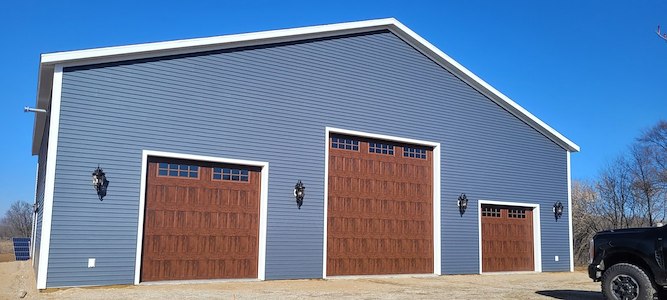
If you want a comfortable, dry, and durable post frame building in Ann Arbor, MI, the right insulation plan is not optional. It is the core of how your barn feels in January and July, how it resists condensation, and how long finishes last. As a local pole barn construction team, Omni Builders builds for our weather and your use, and we start that plan the day we design your structure. If you are exploring options for new or upgraded post frame barns, this guide breaks down what works for Michigan.
Why Insulation Matters In Ann Arbor’s Climate
Our area sees deep freezes, sudden thaws, and sticky summer humidity. That swing creates a simple physics problem: warm, moist air touches a cold surface and turns into water. Inside a metal building, that water shows up as “barn rain,” rust at fasteners, damp tools, and musty smells.
Good insulation adds steady temperature, fewer drafts, and far less moisture on cold surfaces. It also quiets wind and rain. From Scio Township shops to Pittsfield Township hobby garages and small barns near Saline, we see the same result: better comfort and fewer headaches when insulation, air sealing, ventilation, and finishes work together.
How Pole Barn Walls Are Insulated The Right Way
Post frame walls don’t start with studs every 16 inches like a house, so the assembly needs to be tailored. Most Ann Arbor shops and garages choose one of these professional approaches:
- Closed-cell spray foam applied directly to metal or sheathing for high R-value per inch, strong air control, and moisture resistance.
- Rigid foam boards with a continuous interior liner system for a clean, bright interior and a thermal break over the girts.
- Hybrid systems that pair rigid foam or closed-cell foam at the metal with cavity insulation behind an interior liner panel.
Where the interior is heated or cooled, the warm-in-winter side should include a smart vapor retarder or a material that already controls vapor. That keeps moisture from migrating into cold layers and condensing. For a good primer on pole barn basics, see what you need to know about pole barns.
Roof And Ceiling Strategies That Stop “Barn Rain”
Your roof is the first place condensation shows up. You have two main paths that work well in Washtenaw County:
- A vented ceiling with baffles at the eaves, blown insulation above the ceiling plane, and a continuous ridge vent. This keeps the attic cold, the ceiling warm, and moisture moving out.
- An unvented roof deck insulated with closed-cell spray foam directly under the metal. This warms the metal from the inside and puts the dew point inside the foam, not on the panel.
Do not trap moisture inside the roof. If you install a ceiling, pair it with proper ventilation and air sealing. If you go unvented, use a true air and vapor control layer at the roof deck so indoor air can’t reach a cold surface.
Choosing Vapor Barriers And Air Control Layers
People often say “vapor barrier” when they really need two things: an air barrier to stop leaks, and a vapor retarder to slow moisture diffusion. Closed-cell spray foam can do both. In other assemblies, the interior liner plus taped seams and a smart vapor retarder will manage moisture while allowing controlled drying.
Use a continuous air and vapor control layer across walls, transitions, and the ceiling. Seams, corners, and penetrations are where failures start, so professional detailing around doors, windows, and loft framing matters a lot in a pole building.
Drip-Stop vs. Traditional Wrap: What Works On Michigan Roofs
Metal panels with factory-applied felt backings are designed to absorb and release moisture when conditions change. This option is often called drip-stop, and it is effective for controlling incidental condensation on cold mornings when interior humidity temporarily spikes.
Traditional wraps under the roof can include synthetic underlayments or interior plastic films. They do not absorb moisture; they rely on proper ventilation and air sealing to keep surfaces dry. In many Ann Arbor shops, a layered approach performs best: drip-stop beneath the metal for short-term absorption, plus either a vented attic with blown insulation or an unvented roof with closed-cell foam. Match the product to the whole assembly so you are not counting on one layer to solve every problem.
Condensation Control: Ventilation, Thermal Breaks, And Details
Insulation is only one part of the solution. The small details are what stop rust and “sweating” for good:
- Soffit and ridge ventilation sized for the building when using a vented ceiling.
- Thermal breaks over wall girts and roof purlins to warm the interior surface and reduce cold stripes.
- Moisture control at the slab and entries, since melting snow from vehicles raises indoor humidity fast.
- Well-sealed overhead doors and framed openings that don’t leak air at the perimeter.
Balance insulation with ventilation so humid air has a path out. That balance is why the final layout, door sizes, and even where you park equipment all factor into the plan.
Wall, Roof, And Liner Combinations That Fit Your Use
Every building use pushes the design in a slightly different direction. Here are common goals we see around Ann Arbor, Ypsilanti, and Saline and how a pro typically responds:
Conditioned workshop with year-round HVAC: closed-cell foam at the roof deck or a tight, vented ceiling with baffles and blown insulation; rigid or closed-cell foam at walls behind a bright steel liner panel; smart interior vapor retarder; careful air sealing at overhead doors and outlets.
Hobby garage with occasional heat: hybrid wall system that adds a thermal break, drip-stop roof panels, and a vented ceiling if you want storage space above; air sealing around service doors to keep the space draft-free when the heat is on.
Cold storage for equipment or hay: drip-stop roof, strategic ventilation, and durable interior liners that resist bumps and scuffs. The goal is to limit condensation and protect metal where warm air occasionally hits cold panels.
Local Durability: Snow, Wind, And Freeze–Thaw
Post frame buildings in neighborhoods like Burns Park, Water Hill, and out toward Dexter see drifting snow and sharp winds. Insulation and liners help the structure feel tighter, but they also protect hardware and sheathing from repeated wet-dry cycles. When the interior stays closer to a steady temperature, fasteners move less, panels flex less, and your finishes last longer.
For a broader comparison of building types, including how maintenance differs when you insulate, explore pole barn vs. metal building: cost, maintenance, and longevity compared.
Design Coordination: Get The Layers Right From Day One
Insulation choices affect framing, panel selection, and vent paths. That is why we coordinate the envelope from the first sketch. Our team maps where air and vapor control layers begin and end, how they cross corners, and which liner fits your traffic and cleanup needs. If you are still deciding on a structure, browse our pole barn options to see what fits your property and timeline.
If you’re researching options at a high level, this resource on pole barn insulation Michigan will help you frame your goals before we finalize your design.
What Homeowners Often Ask Us About Vapor Barriers
We are asked whether a single plastic sheet will solve condensation. The answer is no. The whole assembly has to work together: interior air sealing, smart vapor control, proper ventilation or a fully insulated roof deck, and a liner that stands up to daily use. Plan insulation during design for best results, because it decides where posts, girts, wiring chases, and ceiling heights should land.
Ready To Insulate Your Pole Barn In Ann Arbor?
Whether you’re finishing a new build or retrofitting an older structure, Omni Builders will pair the right wall system, ceiling approach, vapor control, and ventilation for your exact use. Call 517-403-4919 to talk through your goals, or start by reviewing our pole barn construction page to see how we build for Michigan weather.